
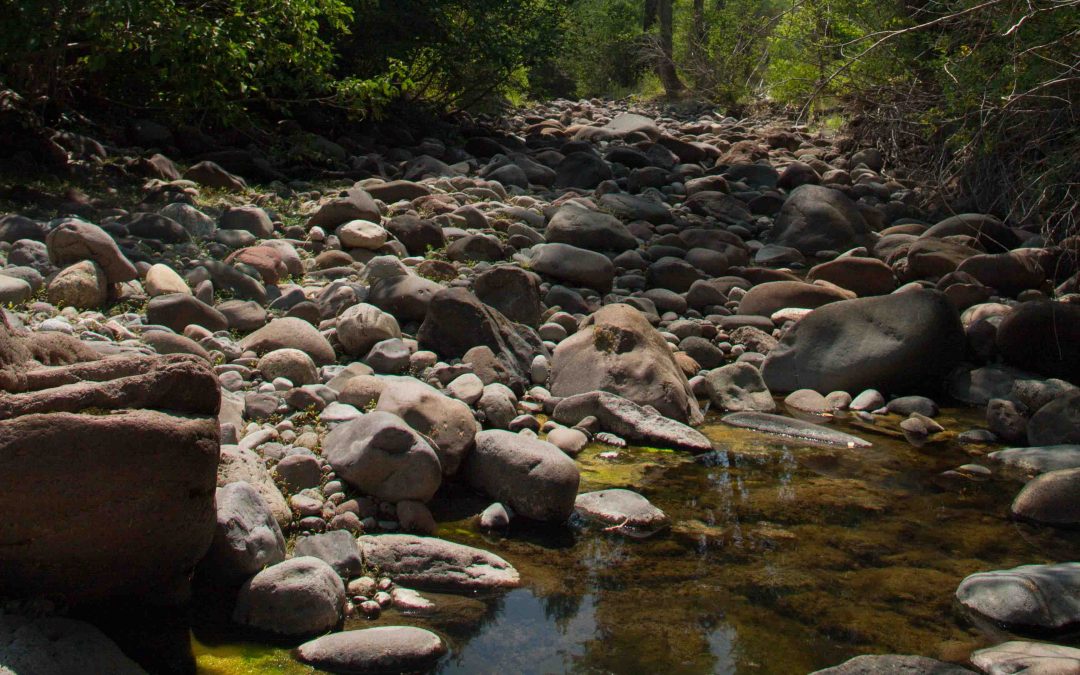
As the drought emergency continues, Colorado’s parched streams and struggling fish may see some relief, not just from this week’s snow, but from a nonprofit that specializes in brokering deals that can result in more water for the environment.
The Colorado Water Trust, founded in 2001, has negotiated agreements that have put more than 98,000 acre-feet of water back into streams. An acre-foot equals 326,000 gallons of water, enough to serve two to four urban households for one year, or enough to cover one acre of land to a depth of one foot.
Typically the trust matches water owners with interested buyers and helps move the transactions through the various state agencies that must approve them. Under old Colorado law, water could only be used for a specific purpose, such as farming, or municipal drinking water or industrial uses. But new laws allow water to be used for environmental purposes, with proper approvals.

This year the trust is hoping it can find water owners, such as ranchers and others, who might have spare water and are willing to put it back into a stream to aid fish in exchange for cash.
If that seems like a crazy quest, looking for spare water in a drought emergency, it might not be, according to Kate Ryan, executive director of the water trust.
“This is a totally unprecedented situation,” Ryan said, referring to the water shortages. “We want people to know they have options with regard to their water rights.”
This past year, Colorado witnessed some of its lowest snow depths on record as well as a historic March heat wave that caused snow to melt early, leaving streams strapped. According to the data site snoflo.org, streams are projected to see an average of just 37% of their normal flows this year statewide.
According to the Natural Resources Conservation Service, some will see much less, as little as 12% or lower in dry areas, such as the southwestern corner of the state.
Farmers and ranchers use roughly 80% of Colorado’s water supply. Moving extra water down a stream or an irrigation ditch requires that a certain amount of water be present to carry it. Think of the extra water as a raft that is unable to move unless there is water underneath it on which it can float. If the streams and irrigation ditches are nearly dry, water can’t be moved to where it is normally used, leaving it stranded upstream or in a reservoir. That water is one source that might be available for these environmental deals.
In addition, even if there is some water early in the season, many farmers and ranchers already know they won’t have enough to grow a crop, so they may be looking for alternate ways to use their water while generating some income.
Under these scenarios, it might make sense to sell it. If it’s sold to the water trust, it can be used in stream segments in which it will benefit fish and the environment, Ryan said.
“We’re not asking people to do things just out of the goodness of their heart,” she said. “We want to provide a service to people who rely on water for their livelihoods.”
Carbondale rancher Bill Fales has provided water to the water trust in other dry years. But he said this year, he doesn’t think the small amount of water he might have available on a tributary to the Crystal River would be enough to make a deal possible.
“In the past I’ve turned off my ditch one or two years to be a good citizen,” he said. “But I don’t think there is going to be any water, and then to ask someone who is on a starvation diet to give up what little they have is a tough sell.”
Still Ryan says the water trust has already received one inquiry from a rancher interested in its offer and she said they have funders standing by to help provide cash for transactions.
How the fish will fare in the meantime isn’t clear. In previous dry years the water trust has worked with partners to add water in places where it can help the most. Often that is better than nothing.
“If fish have even a little pool for refuge, sometimes they are OK until the stream comes back,” she said.
 Print
Print